College football has a problem. If we’re being honest, college football has an abundance of problems, but most of those fall firmly outside our purview, as fans, to fix. However, the college football playoff conversation is solvable.
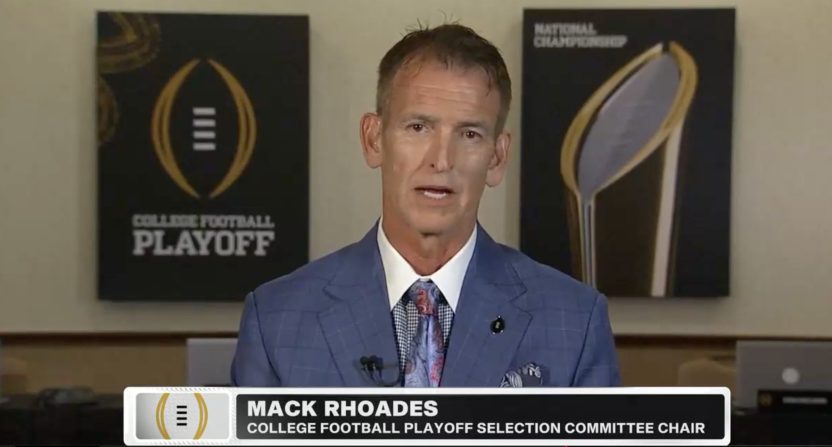
Nick Saban became the latest in a long line of television analysts to say the complete wrong thing about college football playoff selection last Saturday. (Before you start, I recognize that criticizing Nick Saban is tantamount to treason in the state of Alabama and I’m fully prepared to defend myself against the pitchfork-wielding vigilantes). The comment, in case you missed it, centered around teams playing high-profile, early-season, non-conference games, and how “good losses” can be better than “bad wins.” I’m sorry but what??? To quote Herm Edwards, “You play to win the game! You don’t play to just play it.”
Here’s how the argument should go. Teams are evaluated based on the totality of their 12-game (or 13 if they play a conference championship game) schedule. All wins and losses matter, but some matter more than others. Who you play and how you play are factors each week. Based on that, things can be separated out into wins of varying degrees of “goodness” and losses of varying degrees of “badness.” Losses can never be better than wins, but that doesn’t mean a team with more losses couldn’t necessarily be better, or even have a better resume, than one with fewer losses. Performance across the totality of the schedule matters, but that brings us to the next crucial distinction.
When you talk about total performance, does that mean the team that consistently plays the best? Hits the highest peak? Has the highest floor? None of this is abundantly clear in the CFB Committee’s mandate to find the “best” teams. This also brings us to another point. Should we be trying to find the twelve “best” teams or the twelve “most deserving” teams? Those two things aren’t the same either. Arguably, if it’s the twelve best teams then having guaranteed spots should not exist.
These are the heavy-hitting philosophical debates that keep me awake at night and drive me insane during the season. This is the reason why I spent the summer commandeering my wife’s ChatGPT account to help write my own college football rankings. After hours of brainstorming and even more hours of coding an algorithm, I can finally unveil to you the first “4 Down Territory Top 25” rankings, but before I dive in a brief explanation and a caveat. These rankings are really a combination of two separate rankings. The first is my power ranking system, which uses weighted second-order wins to determine “how good are you.” (Caveat #1: preseason rankings don’t exist in my power poll so for the first few weeks it will take some time for the rankings to calibrate the weighted component appropriately). The power ranking doesn’t directly care each week if you win or lose, but it is based on scoring margin so indirectly wins and losses matter. The second ranking is my resume ranking, which cares very much about wins and losses. This is the “how deserving are you” component of the rankings. The resume ranking awards resume points for wins and subtracts them for losses. Better wins earn more resume points. “Worse” wins earn fewer. Likewise, “better” losses subtract fewer points than bad losses. Afterwards, I composite both of these (weighted slightly more towards power because twelve seasons’ data suggest it is slightly more valuable) to get the composite rankings.
To paraphrase a true visionary, America deserves a better class of college football rankings…and I’m gonna give it to ’em.

1. LSU (2-0) (Power: 1, Resume: 1)
On the field, the Lane Kiffin era at LSU couldn’t have started more smoothly. Even though they started slowly against Louisiana Tech, they look like a juggernaut.
2. Texas A&M (2-0) (Power: 2, Resume: 4)
It took them three quarters, but the defense took over in the fourth against Arizona State forcing three turnovers, including a pick six. Marcel Reed does look like he’s made strides as a passer in the offseason.
3. Pitt (2-0) (Power: 3,Resume: 3)
Saturday’s win was as much over Mother Nature as it was over UCF, but it still counts.
4. Virginia (2-0) (Power: 4, Resume: 9)
Beau Pribula’s usage rate is borderline reckless, but the Hoos know how to run the tater.
5. Maryland (2-0) (Power: 7, Resume: 12)
We’ll see who the Terps really are against Virginia Tech this weekend.
6. UCLA (2-0) (Power: 18, Resume: 6)
My portfolio is overloaded with Bob Chesney stock. I had them 7-5 in the preseason and thought that was an optimist’s view…maybe not.
7. Auburn (2-0) (Power: 21, Resume: 5)
Auburn’s offense, specifically the running game, hasn’t been as high-octane as I expected with Byrum Brown. That will need to change if they want to beat Florida this weekend.
8. Texas (2-0) (Power: 15, Resume: 8)
After the worst possible start to a game, Arch struggled for the better part of three quarters. Can he channel that fourth quarter guy going forward?
9. Alabama (2-0) (Power: 12, Resume: 10)
The score looked better than the game. Alabama’s offense looks lost and poorly coached. The defense seems to know what it’s doing at least.
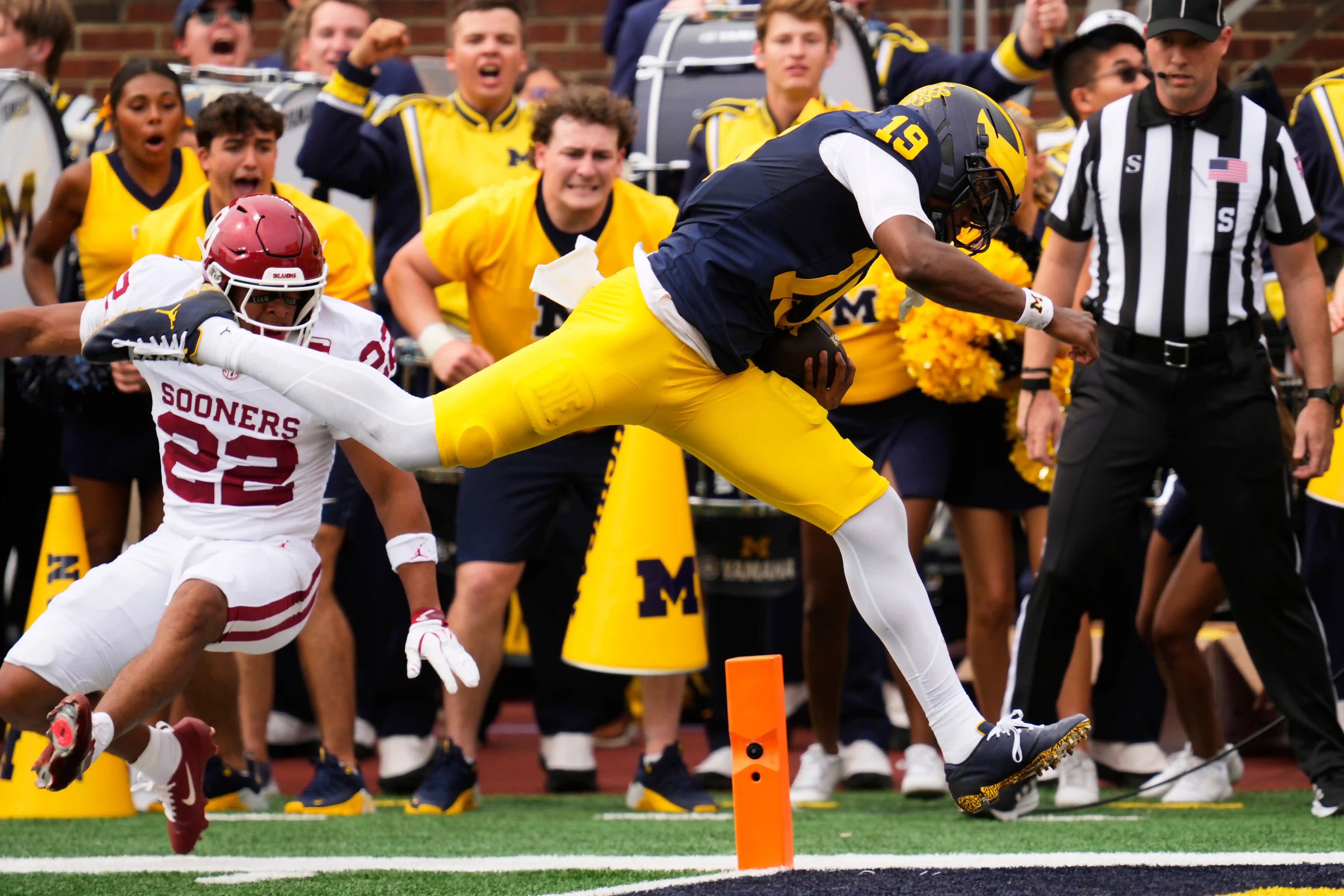
10. Michigan (2-0) (Power: 32, Resume: 2)
They do lead the nation in seconds played per game (tied with Western Michigan, of course).
11. Indiana (2-0) (Power: 8, Resume: 23)
They haven’t been tested yet, but this offense already looks more explosive than last year.
12. Mississippi State (2-0) (Power: 14,Resume: 14)
Kamario Taylor is the real deal. The rest of the SEC is officially on notice.
13. Notre Dame (2-0) (Power: 10, Resume: 24)
They’ve avoided a pre-autumnal equinox loss for the first time in two years. 12-0?
14. Miami (2-0) (Power: 5, Resume: 39)
Eye test tells me they are the best team.
15. Georgia State (2-0) (Power: 24, Resume: 16)
Full disclosure: I had to remind myself who they’d played so far. I guess that road win over Kennesaw State is a “quality win.”
16. Virginia Tech (2-0) (Power: 13, Resume: 33)
James Franklin just didn’t something Brent Pry never could: beat Old Dominion convincingly.
17. UCF (1-1) (Power: 6, Resume: 66)
Maybe we declared the Scott Frost offense “back” a tad bit prematurely.
18. Houston (2-0) (Power: 20, Resume: 32)
Putting it in writing now, the Coogs will knock off Texas Tech on Friday night.
19. Ohio State (1-1) (Power: 11, Resume: 54)
Another bad beat in a big game for Ryan Day. Ohio State is still a natty contender though.
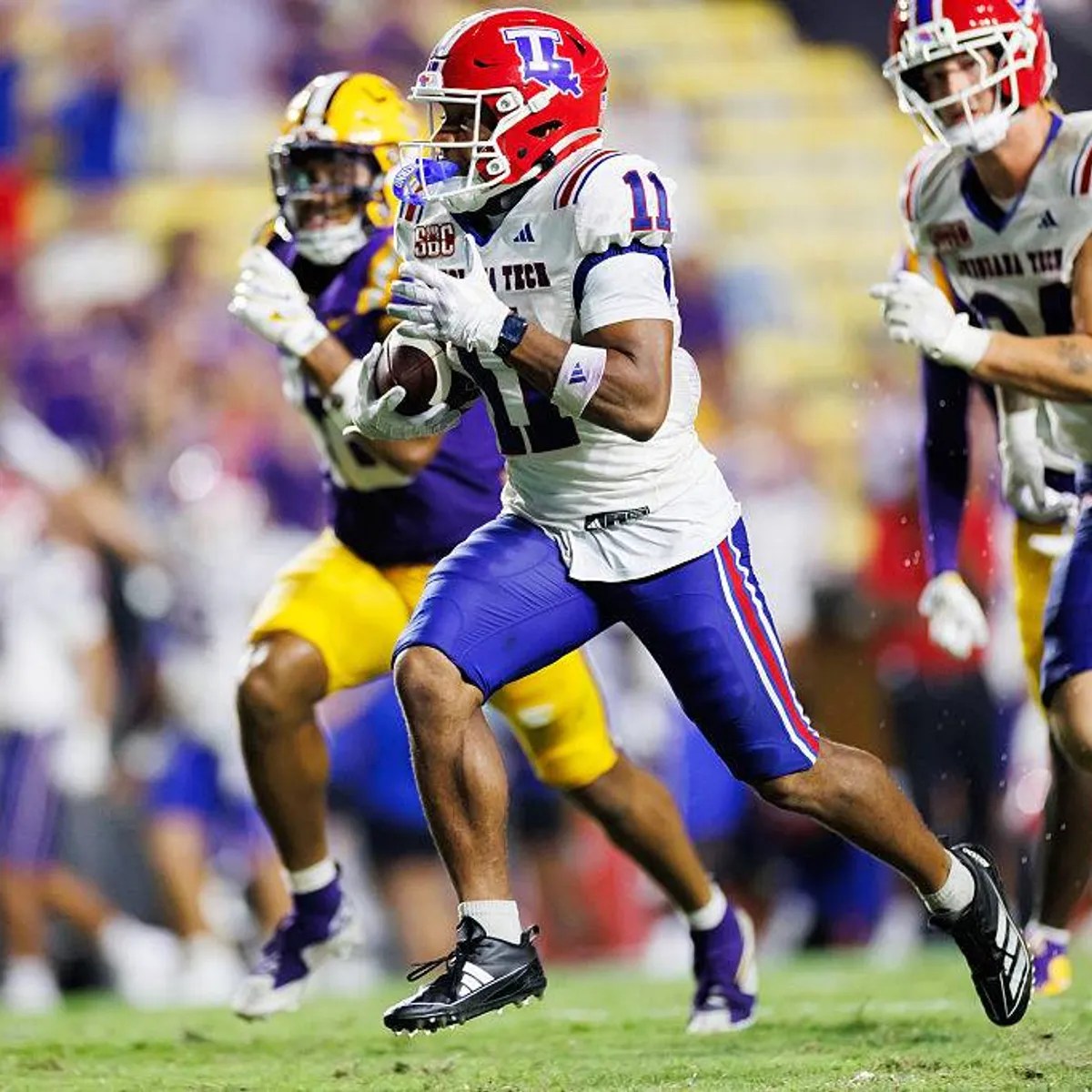
20. Louisiana Tech (1-1) (Power: 9, Resume: 62)
Overinflated by hanging 80 on Northwestern State on opening weekend. They played LSU more competitively than Clemson did, though.
21. USC (3-0) (Power: 28, Resume: 20)
They look the part so far, but I’ve seen this movie before. The freshmen standouts are standing out.
22. Michigan State (2-0) (Power: 39, Resume: 11)
Big “prove it” week for Sparty.
23. USF (2-0) (Power: 53, Resume: 7)
No Byrum Brown. No Alex Golesh. No problem…yet.
24. Missouri (2-0) (Power: 33, Resume: 19)
Austin Simmons looked great on Friday night. When they get Ahmad Hardy back, this offense will be dynamic.
25. BYU (2-0) (Power: 29, Resume: 28)
Still my pick to win the Big XII. LJ Martin and Bear Bachmeier are the most underrated backfield in the country by casual observers.
Cover Photo Courtesy of Nathan Ray Seebeck/Imagn Images

